Why fancy colour diamonds are cut differently
A colourless diamond is cut for brilliance; a fancy colour diamond is cut for colour — which is why radiants and cushions dominate.
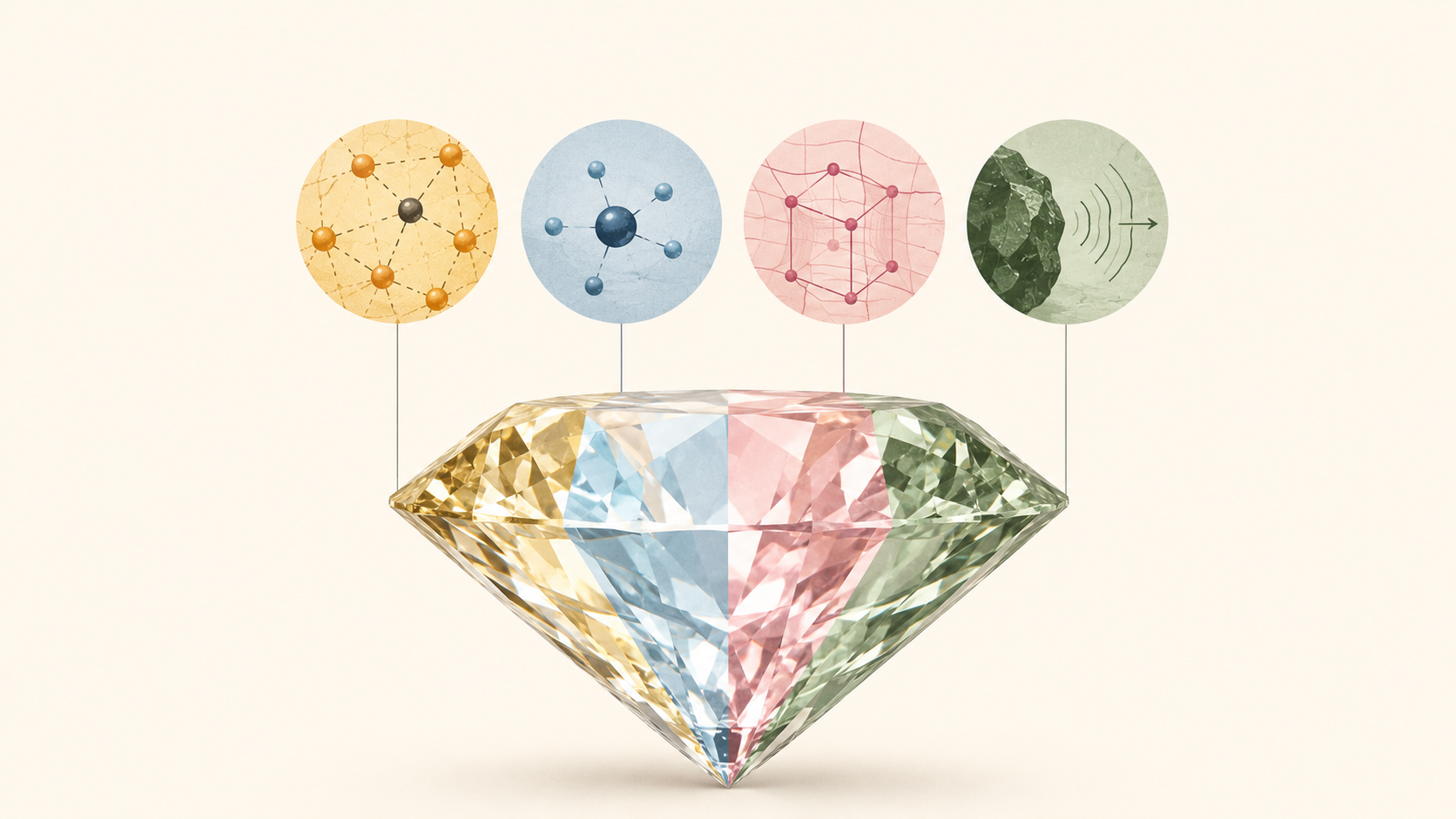
Look across a tray of fancy colour diamonds and you will see far more radiants, cushions and pears than rounds. That is not fashion — it is physics. A fancy colour diamond is cut to a different goal than a colourless one, and the shape is part of how it earns its grade.
Brilliance versus colour
A colourless diamond is cut to maximise brilliance — to return as much white light to the eye as possible, which is why the round brilliant reigns. A fancy colour diamond is cut to deepen and hold its colour, sometimes trading a little brilliance to do it. The cutter's job is to make the stone face up as richly coloured as the rough allows.
Why fancy shapes win
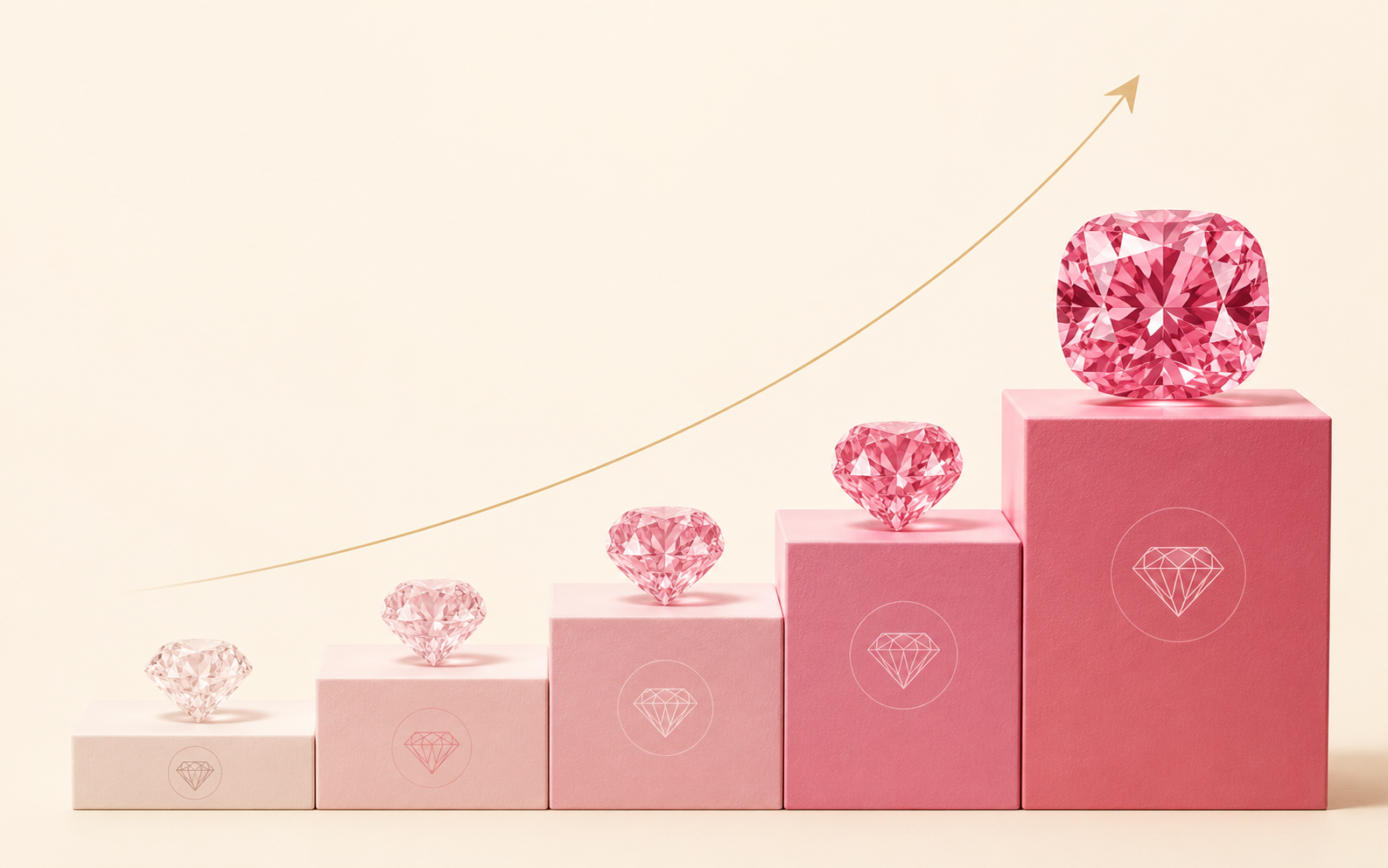
Elongated and stepped shapes — radiant, cushion, oval, pear — send light through more coloured material before it leaves the stone, concentrating the colour and returning it to the eye. A radiant will often reach "Fancy Vivid" from rough that a round would only bring to "Fancy Intense". That is why the same rough is almost always cut to a fancy shape.
In colourless goods, cut is about light. In fancy colour, cut is about colour.
What it means for a buyer
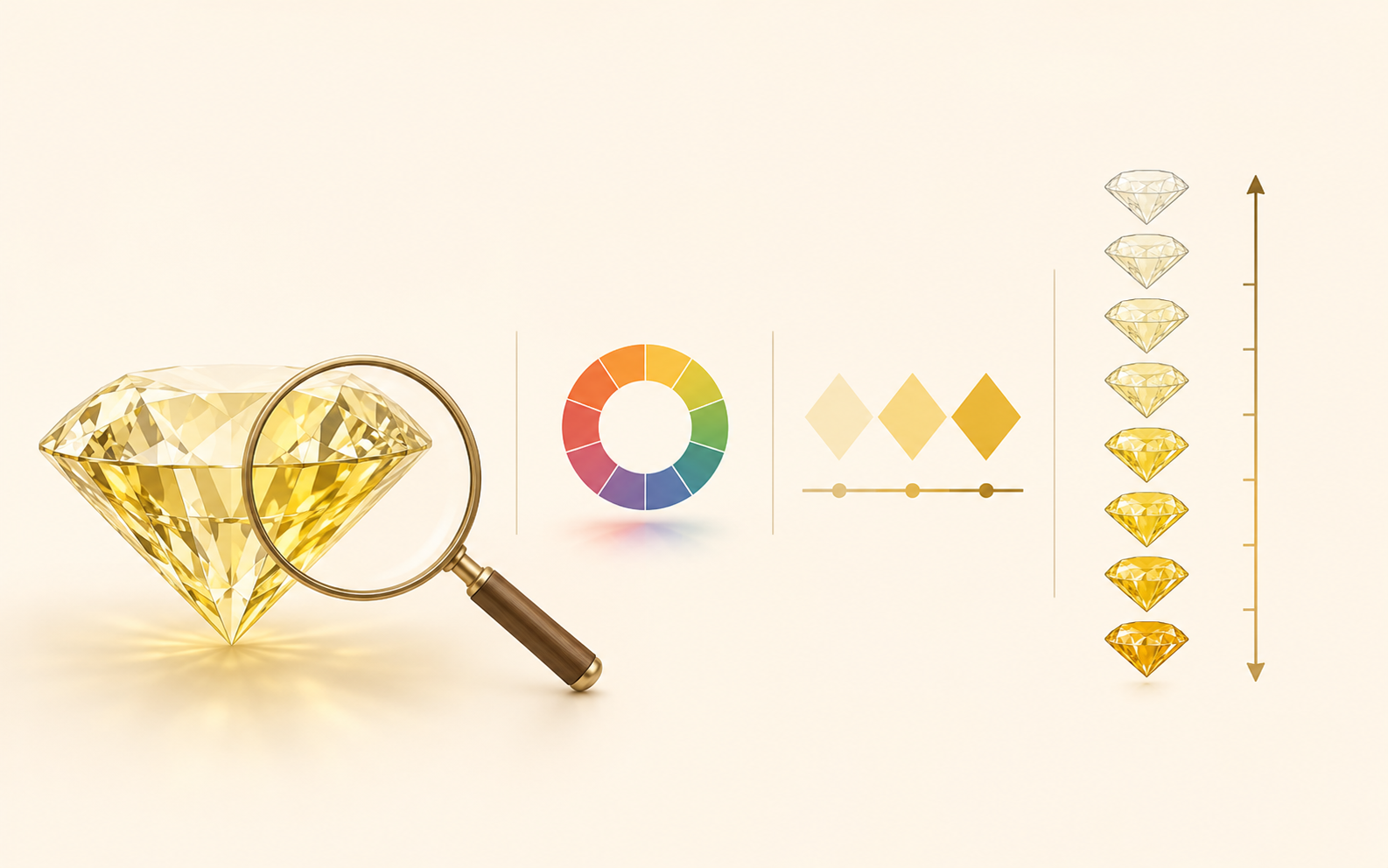
Do not judge a fancy colour stone by the standards of a white one. A slightly deep cushion that shows a superb, even colour is doing exactly what it should. Read the face-up colour first, then the shape and proportions — and always view the stone or its video, because a grade describes a range.
See how it plays out across our natural fancy colour diamond collection, from vivid yellows to rare pinks and blues.
← All primers