Fancy green diamonds explained
A colour written by natural radiation over millions of years — subtle, scarce, and one of the hardest origins for a lab to confirm.
Green is the quiet rarity among fancy colours. The Dresden Green, at around 41 carats, is the most famous natural green in the world — and its fame owes as much to how few natural greens exist as to its size.
Colour from radiation
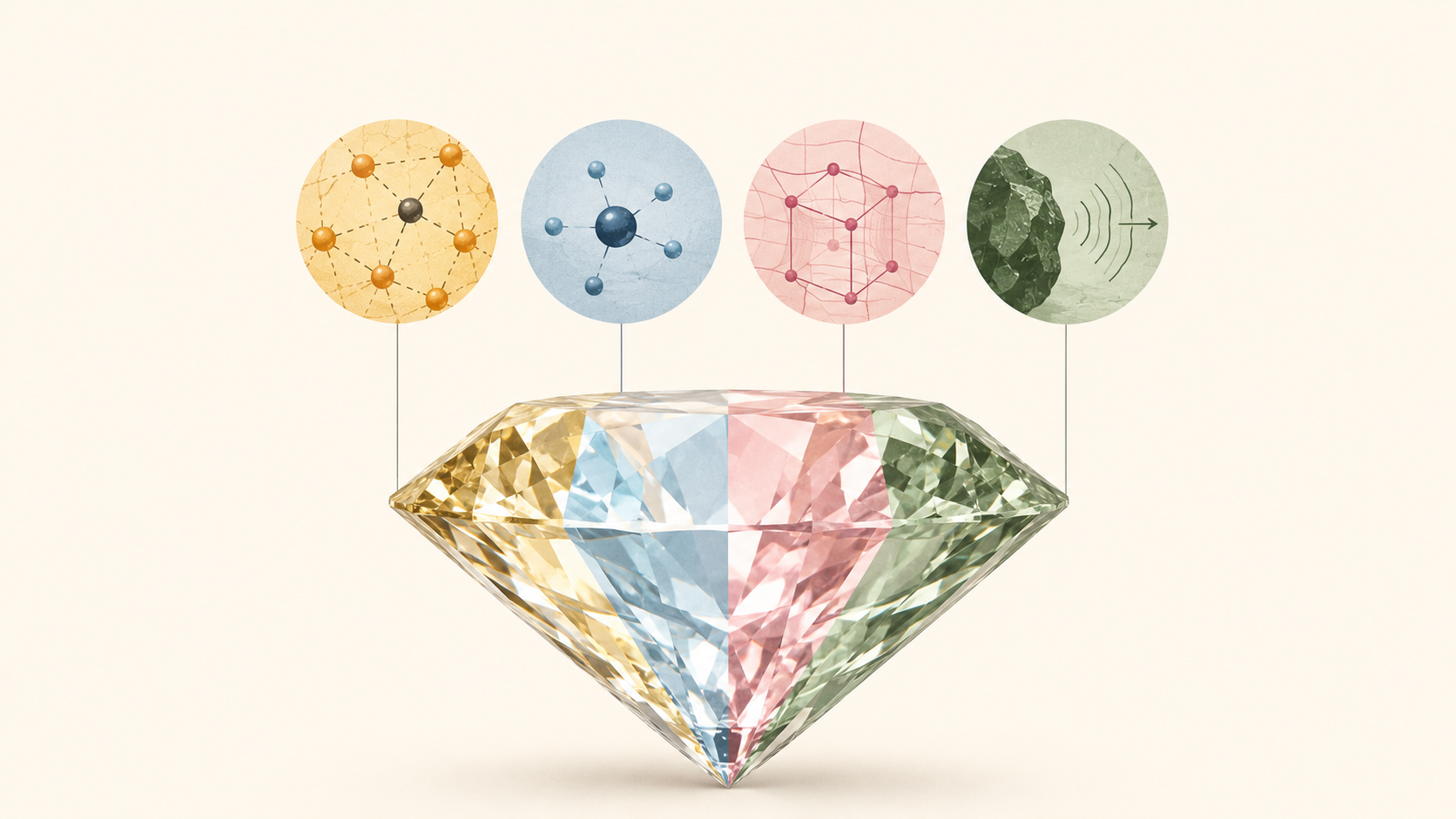
A green diamond gets its colour from natural radiation: over millions of years, nearby radioactive rock knocks carbon atoms out of place in the crystal, and the displaced structure absorbs red light to leave green. The effect often sits only skin-deep, in a thin layer near the surface.
Why the report is decisive
That skin-deep colour is exactly what makes green the hardest origin for a laboratory to confirm — natural irradiation and the artificial kind can look alike. A GIA, IGI or HRD report stating a natural colour origin is therefore non-negotiable for a green; without it, the colour claim carries real risk.
Collectors prize natural green for its subtlety and its scarcity in strong, even colour.
Grade and character
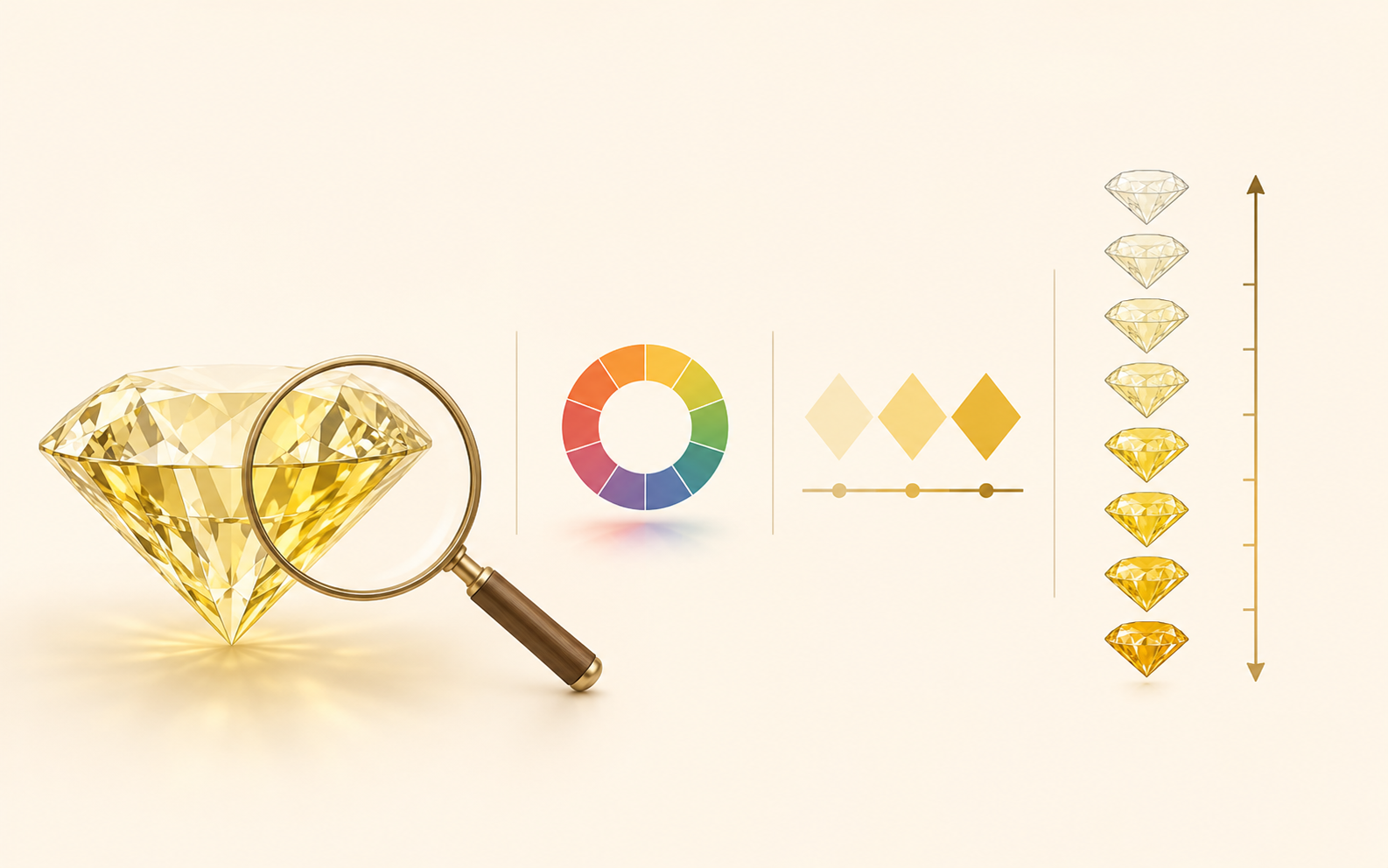
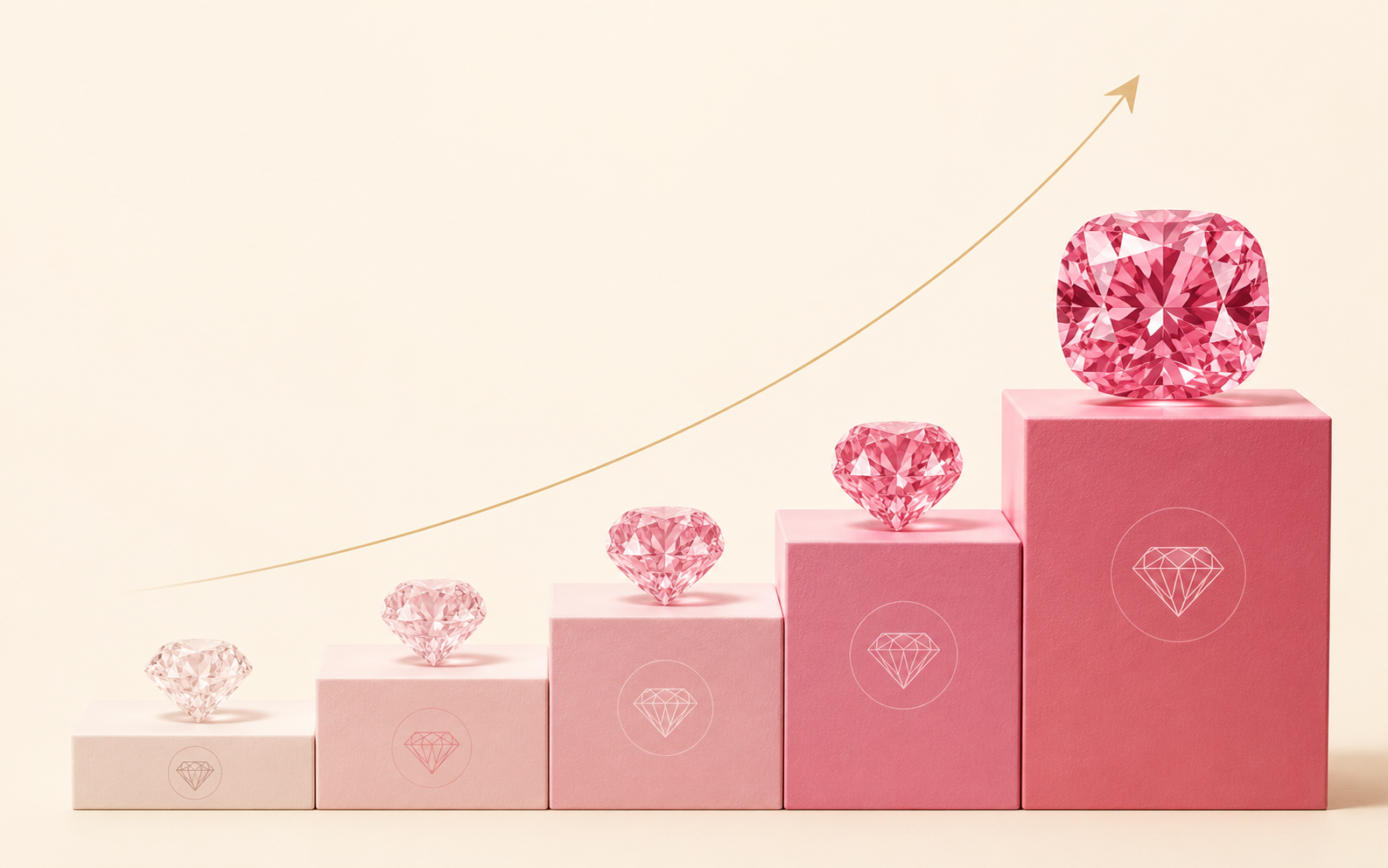
Greens run the usual ladder from Fancy Light to Fancy Vivid and Fancy Deep, often with a yellowish or bluish overtone that shifts the character. Even, pure green in strong saturation is exceptionally rare.
See the Fancy Green diamonds we currently hold — each certified with a natural colour origin — or ask us to source a specific grade.
← All primers